

Today’s K-6 students face a swirl of societal pressures and distractions. From technology overexposure to changing social norms, children often struggle to cultivate meaningful values such as understanding the long-term value and importance of love, honesty, and gratitude in their daily lives. Despite the best efforts of educators, many classrooms lack consistent, visually engaging tools that reinforce everyday virtues. The formative years of a child’s life are critical for developing essential qualities like civility and forgiveness, and if these lessons are not consistently reinforced, children may miss a prime opportunity to adopt them for life.
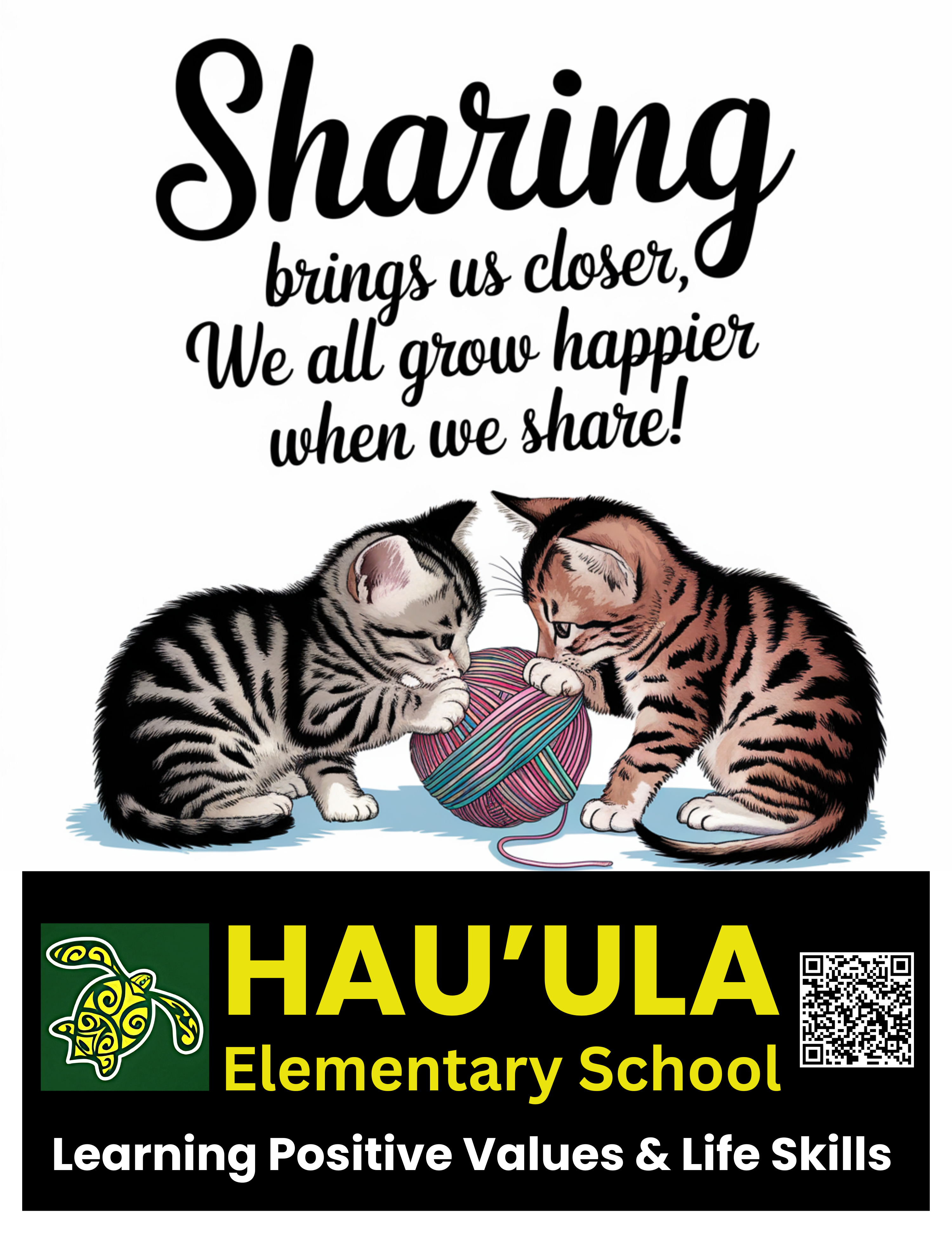
Furthermore, as families juggle multiple responsibilities, moral and life-skill education can become fragmented. Schools do incorporate character-building lessons, but these sporadic efforts may not fully capture students’ imaginations or provide ongoing, memorable reminders of key principles. Our T-shirt initiative addresses this gap by merging creative design with powerful moral messages. Each shirt is a daily visual nudge toward positive behavior—“Kindness Is Contagious”, “Choose Aloha” or a words-based design sparking curiosity, prompting students to ponder new perspectives.
All 350 K-6 students and staff at an Oahu elementary school will directly benefit from this program at the pilot school site, with the potential for ripple effects across families, caregivers, and community members who see these school uniform shirts in action. By infusing core values—like optimism and mercy—into a friendly, wearable format, we create an environment where positive messages are consistently front and center. The shirts also unify students under the school’s emblem and school colors, bolstering school spirit and a sense of belonging.
This opportunity goes beyond just distributing T-shirts. It offers an avenue for children to explore virtues in a creative context, engage in conversations about moral choices, and share stories of kindness or perseverance prompted by their shirts. Ultimately, we envision a future where moral education is woven seamlessly into students’ daily routines, supported by vibrant visuals, uplifting language, and shared community pride.
Grant Proposal to Hawaii Community Foundation and Atherton Foundation
Project Title:
Promoting Positive Values and Life-Skills Through 1,000 Custom T-Shirts for K-6 Students at Hau'ula Elementary School
Executive Summary:
This proposal outlines a project to design, produce, and distribute 500 unique designs on 1,000 T-shirts to K-6 students, featuring uplifting messages, inspirational quotations, life-skills encouragement, and adorable animal illustrations. Each T-shirt will include the school logo on the front and the unique design on the back. This initiative aims to foster a positive learning environment, build self-esteem, and promote character development among young learners. We seek a grant of $10,000 to bring this project to life.
Statement of Need:
In today’s world, children face numerous challenges that can impact their self-confidence, emotional well-being, and values development. It is deeply concerning that certain individuals trivialize slogans like “ainokea”, “whatevah“, “damn kid,” etc., failing to recognize how profoundly these messages can affect children’s sense of self-worth and belonging. Child psychologists and educators have observed firsthand the harm caused by such negative language—especially when it is commercialized and presented as lighthearted or fashionable. Telling a young person that you do not care about them or that they are “damned” can erode their confidence, skew their understanding of healthy social norms, and create a toxic environment where callousness is normalized as humor.
The formative years in elementary school provide a crucial window to instill positive messages and life-skills. Clothing, being a visible and constant presence, can serve as a medium for reinforcement of these ideals.
Through this project, we aim to:
- Provide students with an uplifting daily reminder of their potential and the importance of hundreds of values and life-skills such as kindness, perseverance, teamwork, etc
- Strengthen school spirit by incorporating the school logo and colors on every shirt/uniform.
- Foster an inclusive, supportive atmosphere in classrooms and playgrounds.
-
Address the lack of visually engaging and values-driven materials in schools that support character development and counter the negative messages children are surrounded with in social media, apparel, etc.
Goals and Objectives:
Goals:
- To inspire Hau’ula Elementary K-6 students to embody positive values and life-skills daily for up to a period of 3-5 years (depending how they outgrow the shirts).
- To enhance the school’s culture by promoting unity and pride.
Objectives:
- Design 500 unique and produce 20 of each design (for a total of 1,000 shirts / 400 students and staff = 2 per student and staff) with positive messages about positive virtues and life-skills, using cute animal illustrations and Hawaiian Aumakua. Total cost 1,000 shirts x $10.00 = $10,000
- Incorporate feedback from students and educators to ensure messages and artwork resonate with the target audience.
- Distribute the T-shirts to students at a special school-wide event to maximize impact and excitement.
- Monitor the impact of the initiative through teacher and parent feedback surveys.
Project Design:
-
Design Phase:
- Collaborate with local artists, educators, and students to create designs.
-
Each design will feature:
- A cute, age-appropriate animal illustration.
- An uplifting message or life-skill reminder (e.g., “Kindness is Contagious,” “Perseverance Pays Off,” “Dream Big”).
- The school logo prominently displayed on the front.
-
Production Phase:
- Partner with a local printing company to produce high-quality, durable T-shirts. (Big Red Store in Hau’ula).
- Ensure environmentally friendly materials and production practices are used wherever possible.
-
Distribution Phase:
- Host an event where the T-shirts will be distributed to students, paired with a short assembly or workshop about the importance of the values highlighted.
- Each student will receive 2 unique T-shirts.
-
Follow-Up:
- Conduct surveys to measure the initiative’s impact.
- Share success stories and photographs with the foundation and community.
Timeline:
Month 1:
- Form project team and finalize designs.
- Collaborate with local artists and educators.
Month 2:
- Place production order with printing company.
- Begin event planning.
Month 3:
- Receive and inspect completed T-shirts.
- Host the distribution event.
Month 4:
- Collect feedback from students, parents, and educators.
Budget:
|
Item |
Cost |
|
Artist and Design Fees Donated by Yes Education |
$0 donated |
|
T-Shirt Production (1,000) Big Red Store (Hau’ula) |
$10,000 |
|
Event Costs (venue, etc.) |
$0 donated |
|
2 Parent printed letters |
$0 donated |
|
Administrative Costs |
$0 donated |
|
Total |
$10,000 |
Evaluation:
To ensure the project’s success, we will:
- Distribute surveys to parents and teachers to gather feedback on students’ reactions and any noticeable behavioral impacts.
- Assess participation levels in the distribution event.
- Document testimonials and stories from the school community.
Sustainability:
This project has the potential to evolve into an annual tradition or expand to other schools in Hawai’i. By creating reusable designs and fostering partnerships with local businesses and artists, we aim to sustain the initiative beyond the initial funding period.
Conclusion:
With the support of the Hawaii Community Foundation and Atherton Foundation, this project will positively impact the lives of K-6 students by instilling values and life-skills in a creative and engaging way. These T-shirts will serve as daily reminders of important lessons, fostering a sense of pride and unity within the school community.
We look forward to the opportunity to partner with your foundation to make this vision a reality. Thank you for considering our proposal.
Appendices:
- Sample T-shirt designs.
- Letters of support from educators and community leaders.
- Detailed timeline and implementation plan.
ORGANIZATION (Maximum 2,500 characters with spaces)
Established in 2010, Yes Education is dedicated to nurturing positive values and life-skills among children in our community. Our mission is to create engaging, impactful programs that strengthen character, foster creativity, and boost self-esteem in young learners. Over the past decade, we have successfully implemented numerous youth-centered initiatives, including after-school enrichment clubs, mentorship sessions, and school spirit campaigns.
Our team comprises seasoned educators, youth counselors, and creative professionals who share a deep commitment to uplifting children. Staff members bring expertise in art, design, child psychology, and curriculum development. We regularly collaborate with local community leaders and volunteers to ensure that our programs resonate with the unique cultural and educational needs of our region. We firmly believe that early exposure to vital virtues—such as love, honesty, morality, civility, learning, forgiveness, mercy, thrift, industry, gratitude, optimism, and faith—forms the cornerstone of lifelong success.
We combine imaginative design strategies with evidence-based approaches to help students absorb these virtues and see them in action. Drawing upon our experience with school-wide projects, we recognize that young children benefit tremendously from vivid, relatable reminders. Through our new T-shirt program, we aim to reinforce good character every day in the classroom, the playground, and at home, building on the strong foundation we have established within our existing youth initiatives.
By incorporating local young animal mascots (such as playful otter pups, curious fawns, or friendly fox kits), memorable acronyms ("Acceptance") and wise words (e.g., “Welcoming differences reduces friction and promotes harmony.(lLike ducklings adjusting to new siblings joining the flock), our team hopes to delight students while imparting lasting lessons. This creative approach, balanced with our staff’s proven expertise, positions us to lead a meaningful, high-quality program that champions the moral, emotional, and social growth of K-6 learners. This effort is an extension of Christian P. Wilson's published 511-page book promoting positive virtues and life-skills: "Quest for Ikigai: Create a Fulfilling Life" (ISBN-13 : 979-8372992436)
(Character count approximate: ~1,825)
PROBLEM OR OPPORTUNITY (Maximum 3,000 characters with spaces)
Today’s K-6 students face a swirl of societal pressures and distractions. From technology overexposure to changing social norms, children often struggle to cultivate meaningful values such as understanding the long-term value and importance of love, honesty, and gratitude in our daily lives. Despite the best efforts of educators, many classrooms lack consistent, visually engaging tools that reinforce everyday virtues. The formative years of a child’s life are critical for developing essential qualities like civility and forgiveness, and if these lessons are not consistently reinforced, children may miss a prime opportunity to adopt them for life.
Furthermore, as families juggle multiple responsibilities, moral and life-skill education can become fragmented. Schools do incorporate character-building lessons, but these sporadic efforts may not fully capture students’ imaginations or provide ongoing, memorable reminders of key principles. Our T-shirt initiative addresses this gap by merging creative design with powerful moral messages. Each shirt is a daily visual nudge toward positive behavior—whether it’s “Kindness Is Contagious”, “Choose Aloha” or a words-based design sparking curiosity (e.g., FAITH), prompting students to ponder new perspectives.
All 350 K-6 students and staff will directly benefit from this program at the pilot school site, with the potential for ripple effects across families, caregivers, and community members who see these shirts in action. By infusing core values—like optimism and mercy—into a friendly, wearable format, we create an environment where positive messages are consistently front and center. The shirts also unify students under the school’s emblem and school colors, bolstering school spirit and a sense of belonging (Red Raiders for Life)..
This opportunity goes beyond just distributing T-shirts. It offers an avenue for children to explore virtues in a creative context, engage in conversations about moral choices, and share stories of kindness or perseverance prompted by their shirts. Ultimately, we envision a future where moral education is woven seamlessly into students’ daily routines, supported by vibrant visuals, uplifting language, and shared community pride.
(Character count approximate: ~2,340)
PROGRAM ACTIVITIES (Maximum 4,500 characters with spaces)
-
Design Phase
- Collaboration: We will form a creative team of local artists, educators, outreach collaborators and select K-6 student representatives. By involving students, we ensure that each T-shirt’s message resonates with its intended audience.
- Concept Development: Designs will highlight key virtues—Love, Honesty, Civility, Learning, Forgiveness, Mercy, Thrift, Industry, Gratitude, Optimism, etc—in playful yet profound ways. Imagery will feature local young animals and Hawaiian 'Aumakua family protectors such as ducklings, owlets, puppies, kittens, ponies, etc. to foster a sense of community pride. words (e.g., OPTIMISM to encourage pausing for positive thoughts) or short wise quotes (“A kind word can change an entire day”) will be incorporated where appropriate.
- School Logo: The school emblem and colors will appear on the front and back of the shirt, reinforcing school identity and pride.
-
Production Phase
- Local Printing Partnerships: We will source eco-friendly materials and partner with area businesses experienced in sustainable textile printing.
- Quality Assurance: T-shirts will be made with comfortable and durable fabric suitable for frequent wear. We will confirm colorfastness and clarity of both text and illustrations.
-
Distribution & Special Event
- School-Wide Gathering: Students will receive their shirts in each of their classrooms before a fun, interactive assembly. We will highlight a few T-shirt designs and discuss the virtues or life-skills featured.
- Workshops: Brief, age-appropriate workshops will teach practical life-skills—for instance, a five-minute “Gratitude Gratifies” activity or a quick “Honesty Helps” scenario game.
- Inclusive Celebration: All K-6 learners will participate, ensuring that everyone feels involved in promoting a positive, welcoming environment.
-
Follow-Up & Assessment
- Surveys and Observations: Teachers, parents, and students will complete short online surveys measuring shifts in attitudes or behaviors linked from a QR code printed on the T-shirt. We will record anecdotal evidence—like classroom stories of increased cooperation or displays of patience.
- Continued Engagement: Posters and bulletin boards will echo T-shirt themes; educators can refer to designs during lessons (“Remember the perseverance penguin on our T-shirt!”) to reinforce the messages.
-
Timeline
- Month 1: Form the project team, finalize design elements with input from educators and student reps. Leilani Lauaki-Lead co-ordinator, principal, teachers, staff, students).
- Month 2: Send designs to the local printer, plan the distribution event.
- Month 3: Receive T-shirts, sort by size for each classroom, host the event and workshops, launch feedback surveys.
Past Achievements & Future Scalability
Our organization has implemented school-based programs ranging from reading mentorship to art engagement days, consistently meeting or exceeding participation goals. This T-shirt project builds on those successes by leveraging our existing network of community artists and our deep understanding of elementary education. The initiative can later be expanded to multiple schools or become an annual tradition that updates its designs each year, championing new life-skills and quotes.
(Character count approximate: ~3,350)
NETWORKS AND PARTNERSHIPS (Maximum 2,000 characters with spaces)
Collaboration is a key strength of our program. We regularly partner with:
- Local Artists & Designers: They provide the creative flair that makes our T-shirt designs engaging and visually striking. Artists also help integrate culturally relevant images, such as local wildlife, to foster a deeper sense of place.
- Printing Companies & Eco-Friendly Suppliers: By sourcing sustainable materials and working with environmentally conscious printers, we uphold our commitment to social responsibility and community economic development.
- Educators & School Administration: Teachers and school officials serve as vital advisors, ensuring that each design’s theme aligns with classroom objectives. They also assist in coordinating distribution events and capturing post-program feedback.
- Community Volunteers: Parents and community members often contribute time, expertise, or resources to help shape and support our endeavors. They may lead short workshops, offer logistical support during the T-shirt distribution event, or help gather student input.
By uniting these diverse partners, we create a support network that enriches every facet of the project—from design inspiration and production logistics to effective event execution and meaningful follow-up. Each stakeholder plays a distinct yet interwoven role, ensuring the project remains rooted in local values and needs.
(Character count approximate: ~1,150)
EXPECTED RESULTS
-
How much will we do?
- We will design and produce 400 unique T-shirts, each featuring a local young animals, an uplifting message or meme, and the school logo.
- We will host 1 school-wide distribution event and 3-4 mini-workshops promoting virtues and life-skills.
-
What difference will we make?
- We anticipate 100% of students of Hau’ula Elementary School (Title I, 66% economically disadvantaged students, 92% minorities) will report feeling more motivated to practice kindness, honesty, or perseverance.
- We expect teachers to observe increased peer support and respectful interactions in classrooms within two months of T-shirt distribution.
-
How will we know?
- Surveys: Pre- and post-event online questionnaires for students and teachers will measure shifts in attitudes toward core values. Put QR link to online surveys on T-shirts.
- Observations & Testimonials: Educators will document behavioral changes, like reduced conflicts or more frequent acts of gratitude, more volunteer service, less thought of despair and suicide.
- Follow-Up Discussions: We will hold informal feedback sessions where students can share personal stories related to the T-shirt messages.
Thank you for considering our proposal. With the support of the Hawaii Community Foundation and Atherton Foundation, we will bring these positive messages—rooted in love, honesty, morality, civility, learning, forgiveness, mercy, thrift, industry, gratitude, optimism, and faith—to life for K-6 students in a truly memorable way. By igniting imagination through design, uniting our community in partnership, and delivering meaningful character education, we aim to equip our youngest citizens with virtues that last a lifetime.
Lesson Plan
Promoting Positive Values & Life-Skills Through Custom T-Shirts
Lesson Title
“Wearable Wisdom: Exploring Positive Virtues & life-skills”
Grade Level
K-6
Duration
Two 30-minute sessions (or one extended 60-minute session)
Lesson Overview
Students receive their newly designed T-shirts featuring uplifting messages and adorable animal illustrations. Through fun, hands-on activities, they learn the importance of these positive virtues and life-skills—such as kindness, perseverance, gratitude, and cooperation—and commit to applying them in everyday life.
Objectives
- Identify Virtues & Skills: Students will explore at least three positive virtues or life-skills printed on the T-shirts (e.g., kindness, honesty, teamwork).
- Reflect on Real-Life Application: Students will discuss how these virtues can be practiced daily at school and at home.
- Demonstrate Understanding: Through interactive activities, students will show ways to apply each virtue—strengthening unity, empathy, and confidence in the classroom.
Materials
- Custom T-Shirts (distributed beforehand or at start of lesson)
- Large Sticky Notes or small sheets of paper
- Markers/Crayons
- Chart Paper or Whiteboard
- Optional Prizes (e.g., stickers)
Preparation
- T-Shirt Distribution: Have each student receive their T-shirt in class or during a small assembly.
- Display Posters/Designs: Print or project a few T-shirt designs featuring sample slogans (e.g., “Kindness Is Contagious,” “Perseverance Pays Off,” “Choose Aloha”).
- Create a “Virtue Wall”: On chart paper or a bulletin board, list key virtues and skills represented by various T-shirt designs. Leave space for students to add their own ideas.
Procedure (Session One)
-
Introduction (5 minutes)
- Show & Tell T-Shirt Designs: Invite students to hold up or point to the designs on their shirts. Ask them to read aloud the virtue or message (e.g., “Kindness,” “Cooperation”).
- Discuss Why Messages Matter: Ask, “Why do you think it’s helpful to wear messages like these? How do they make you feel?”
-
“Virtue Spotlight” Discussion (10 minutes)
- Choose One Virtue per Grade Level: For instance, K-1 might focus on “Kindness,” grades 2-3 on “Perseverance,” and so forth.
- Group Brainstorm: Write down student ideas on how to practice that virtue. Example: “Kindness—help a friend who’s sad,” “Perseverance—keep trying when math is hard.”
- Share Animal Symbol: Show the related animal design (e.g., a duckling for curiosity). Talk about how that animal’s behavior reflects the chosen virtue.
-
Small Group Activity: “T-Shirt Treasure Hunt” (10 minutes)
- Explain the Hunt: Students walk around the classroom to find classmates wearing different virtue T-shirts.
- Collect 3 Virtues: Each time they find a new virtue or life-skill on a peer’s shirt, they jot it down on a sticky note.
- Share Findings: Have volunteers read the new virtues they discovered (e.g., “I found ‘Self-Control’ on Jessica’s shirt!”).
-
Wrap-Up & Reflection (5 minutes)
- Virtue Wall: Invite students to place their sticky notes on a chart labeled “Our Shared Virtues.”
- Reflection Question: Ask, “What virtue or skill do you most want to practice tomorrow?”
Procedure (Session Two)
-
Recap & Warm-Up (5 minutes)
- Review Virtue Wall: Briefly remind students of the virtues listed. Ask if anyone practiced a particular virtue yesterday or noticed someone else demonstrating it.
-
Interactive Game: “Act It Out!” (15 minutes)
-
How to Play:
- Teacher calls out a virtue (e.g., “Patience,” “Teamwork”).
- Volunteers come up and silently act out a brief scenario illustrating that virtue (e.g., two students cooperating to solve a puzzle).
- Classmates guess which virtue is being demonstrated.
- Discussion: After each charade, ask how it felt to “be” that virtue. Encourage examples of when students might use it in real life (e.g., “I’m patient when waiting in the lunch line.”).
-
How to Play:
-
Classroom Pledge Craft (10 minutes)
- Creating a Pledge: As a class, write a short pledge that incorporates your chosen virtues (e.g., “We promise to show kindness, cooperation, and gratitude every day!”).
- Signing & Decorating: Each student signs the pledge, then decorates the border with drawings of the T-shirt animals or symbols.
- Display: Hang the pledge in a visible spot (classroom door, hallway) to remind students of their commitment.
-
Assessment & Reflection (5 minutes)
- Quick Share: Have each student share one thing they learned about a virtue or life-skill.
- Teacher Observation: Note which virtues resonate most, and keep track of class participation and enthusiasm.
- Exit Ticket: Students write one example of when they will use a chosen virtue this week (e.g., “I’ll use honesty when I make a mistake on my homework.”).
Extended/Optional Activities
- “Kindness Bingo”: Create a 3×3 or 4×4 bingo board filled with kind acts (e.g., help clean up, compliment a classmate). Students mark each completed act over the course of a week.
- Community Incentives: Local shops or vendors might offer small discounts or rewards when they see a student wearing the T-shirt. Encourage families to share photos or stories of these moments.
- QR Code Surveys: Include a QR code on the T-shirt linking to a short, kid-friendly survey (approved by administration) where students can share how they practiced their virtue of choice each week.
Evaluation Criteria
- Student Engagement: Participation in discussions, willingness to share personal reflections.
- Behavioral Observations: Reduced conflicts, increased helpfulness, and reported positive interactions among classmates.
- Survey Feedback: Teacher, parent, and student surveys indicating greater awareness and practice of virtues over time.
Conclusion
Through these fun, hands-on lessons, students not only enjoy wearing their new T-shirts but also learn that each design carries an important life-skill or virtue. By weaving in meaningful discussions, charades, and interactive activities, the T-shirts become catalysts for daily reminders of kindness, respect, cooperation, and more—helping to foster a supportive and uplifting school community.
Rubric
Below is a rubric that can be used to measure each student’s mastery and adoption of the lesson plan on positive virtues and life-skills. You can adapt this table to your specific grading or feedback system.
|
Criteria |
Excellent (4) |
Good (3) |
Satisfactory (2) |
Needs Improvement (1) |
|
1. Understanding of Virtues & Life-Skills |
Clearly and accurately identifies multiple virtues/life-skills on their T-shirt and explains their significance. |
Identifies key virtues/life-skills on their T-shirt with minimal prompting; shows general understanding. |
Lists 1-2 virtues/life-skills but provides limited or vague explanation. |
Struggles to name or describe any virtue/life-skill from the T-shirt. |
|
2. Participation in Class Activities |
Actively engaged in all discussions, group activities, and the “T-Shirt Treasure Hunt”; demonstrates leadership. |
Participates willingly in activities and discussions; occasionally shares ideas with peers. |
Attends activities but shows limited engagement or enthusiasm; offers few or no contributions. |
Shows minimal interest or is frequently disengaged during activities. |
|
3. Application of Virtues in Scenarios |
Provides clear, specific examples of how to use each virtue/life-skill in real-life (e.g., classroom, home, etc.). |
Suggests general or partially detailed ways to use each virtue/life-skill in daily life. |
Ideas for applying virtues are incomplete, vague, or require extra prompting. |
Does not connect the virtues to practical examples or daily behavior. |
|
4. Reflection & Self-Assessment |
Thoughtfully reflects on personal behavior changes, noting specific instances of using new virtues/skills. |
Shows some reflection on personal growth; can mention at least one recent example of a virtue/skill in use. |
Briefly reflects on experiences but lacks detail or personal examples. |
Avoids or is unable to reflect on personal use of the virtues/skills. |
|
5. Collaboration & Support of Others |
Consistently demonstrates respect, kindness, and helpfulness toward peers; encourages others to follow suit. |
Generally kind and cooperative with peers; occasionally supports or praises classmates’ efforts. |
Interacts politely with peers but rarely initiates supportive behaviors or offers encouragement. |
Displays disrespectful or uncooperative behavior; hinders or ignores classmates’ attempts to practice virtues. |
|
6. Consistency Over Time |
Regularly applies virtues/skills in different settings (class, recess, group work) beyond the initial lesson period. |
Uses virtues/skills in class most of the time, with some reminders needed; occasionally shows them elsewhere. |
Demonstrates virtues/skills inconsistently or only when prompted by teacher/peers. |
Little to no evidence of continued practice; abandons virtues/skills after the lesson ends. |
How to Use This Rubric
- Observe & Record: Throughout the lesson activities (and in the days or weeks that follow), observe and record each student’s behavior, class participation, and self-reflections.
- Score Each Criterion: Assign a score (1–4) based on how well the student meets the descriptions under each criterion.
- Calculate Total or Average: Sum or average the scores across all six criteria. You may decide to use a standard grading system (e.g., 4 = A, 3 = B, etc.) or simply use these scores as qualitative feedback.
- Provide Feedback & Next Steps: Offer students specific notes on their strengths (e.g., “You did an excellent job reflecting on personal growth”) and areas for growth (e.g., “Try to incorporate more concrete examples of using the virtue at home or with friends”).
This rubric encourages both in-class involvement (understanding, participation) and long-term adoption (reflection, application outside class). By revisiting it periodically, you can track each student’s progress in embodying the positive values and life-skills introduced through the T-shirt initiative.
How to Evaluate Success of Grant
Evaluating this grant’s impact for K-6 school children often involves a combination of qualitative and quantitative measures that capture both academic and social-emotional outcomes. Below are some key areas and methods used to assess whether the grant will truly made a difference in the lives of young students:
1. Defining Clear Objectives and Outcomes
- SMART Goals: Specific, Measurable, Achievable, Relevant, and Time-bound goals are set at the outset. For example, “Increase students’ reading proficiency by 10% over one academic year” or “Foster positive peer interactions by hosting three monthly kindness activities.”
- Age-Appropriate Benchmarks: Because children are in K-6 grades, evaluation metrics (e.g., reading levels, social skills) are calibrated to each grade level’s developmental milestones.
2. Measuring Academic Progress
- Pre- and Post-Assessments: Evaluate students’ baseline skills (e.g., reading fluency, math competence) before the program starts, and compare them with results after the program ends.
- Teacher Observations and Classroom Performance: Gather input on how well children are retaining new information or improving in targeted skill areas (literacy, numeracy, STEM, arts, etc.).
3. Assessing Social-Emotional Gains
-
Surveys and Questionnaires:
- Student Self-Reports: Brief, age-appropriate surveys about how they feel in school, how comfortable they are participating, and if they notice changes in their own behavior or attitudes.
- Teacher and Parent Feedback: Reflection forms or short surveys about observed changes in behavior, cooperation, empathy, or self-esteem.
-
Observational Tools:
- Checklists or rating scales for teachers to note improvements in social interaction, conflict resolution, and peer support during classes, recess, and group work.
4. Behavioral Indicators and Participation Levels
- Attendance and Engagement: Tracking attendance rates, tardiness, and how actively students participate in special grant-funded activities or lessons.
- Disciplinary Incidents: Monitoring the frequency and severity of behavioral issues before and after the program to gauge if positive messages are reducing conflict.
5. Qualitative Measures and Storytelling
- Interviews and Focus Groups: Informal chats with students, teachers, and parents for deeper insight into how the program influenced attitudes, motivation, or school culture.
- Anecdotes and Success Stories: Collect narratives about individual children’s growth—like a shy student gaining confidence to read aloud, or a group showing outstanding teamwork.
6. Longitudinal Tracking (if feasible)
- Follow-Up Studies: Where possible, evaluating outcomes a few months—or even a year—after the program to see if positive gains in confidence or academic skills are sustained.
- Progression Through Grades: Tracking how many participating students move on successfully to the next grade level or meet critical benchmarks (e.g., reading on grade level by 3rd grade).
7. Community and School Climate Indicators
- School-Wide Culture: Are there fewer bullying incidents? Is there an increase in peer mentorship programs, or do teachers report a more positive classroom environment?
- Parent Engagement: Tracking how many parents attend program events, volunteer, or contribute ideas. Increased involvement can signify that the program is valued and having an impact.
8. Cost-Effectiveness
- Budget Review: Comparing the grant’s total investment against measurable improvements (test scores, attendance, social-emotional benefits) to show return on investment (ROI).
- Resource Leveraging: Noting any additional donations, volunteer hours, or partnerships inspired by the grant’s success can further demonstrate value.
9. Reporting and Transparency
- Regular Progress Updates: Sharing interim results, photos, and narratives with stakeholders (foundation, school board, parents) shows accountability and keeps everyone informed.
- Final Evaluation Report: A comprehensive document summarizing outcomes, lessons learned, and next steps ensures all parties understand the program’s impact and future potential.
In summary, effective grant evaluation for K-6 children looks beyond mere test scores and includes a holistic picture of academic achievement, social-emotional growth, classroom engagement, and community involvement. By setting clear goals, using diverse measurement tools, and reporting transparently, grant administrators and educators can demonstrate meaningful, lasting benefits for young learners.
Evaluating the “Promoting Positive Values and Life-Skills” Grant
-
Defining Clear Objectives and Outcomes
- The project’s primary goals include enhancing students’ sense of belonging, encouraging pro-social behaviors, and reinforcing life-skills through T-shirts displaying positive messages. These objectives are specific (support character development), measurable (track changes in behavior or attitudes), and time-bound (over a three- to five-year impact window).
-
Measuring Academic Progress
- Although the main focus is on values and life-skills, teachers can track improvements in attention, class participation, and overall motivation. For instance, educators can compare pre- and post-lesson performance or note whether students are more engaged after receiving the T-shirts.
-
Assessing Social-Emotional Gains
- Distribute short, age-appropriate surveys to students and parents about emotional well-being, peer relationships, and overall optimism. Teachers can provide feedback on the frequency of cooperative behavior, willingness to help classmates, and reductions in disruptive incidents.
-
Behavioral Indicators and Participation Levels
- Monitor attendance, punctuality, and discipline referrals both before and after the T-shirts’ distribution. If the climate becomes more supportive or conflicts decrease, that suggests the positive messages are resonating.
-
Qualitative Measures and Storytelling
- Gather stories from teachers, students, and families—such as a child citing a T-shirt slogan when helping a friend or students spontaneously discussing virtues in class. Conduct informal focus groups to explore how the project’s messages translate into everyday actions.
-
Longitudinal Tracking
- Review whether behaviors like kindness or perseverance remain elevated three to six months later. Survey returning students (in the next school year) about whether they still recall or use the T-shirt messages.
-
Community and School Climate Indicators
- Look for evidence of a more unified school culture: increased parental participation in school events, more student-driven kindness projects, or fewer bullying reports. A more positive, inclusive tone in daily interactions would indicate meaningful impact.
-
Cost-Effectiveness
- Compare the grant investment (e.g., $10,000 for 1,000 T-shirts) to observed gains: improved student morale, reduced behavioral issues, and increased collaboration. Note any additional partnerships and community participation inspired by the initiative, demonstrating a multiplier effect.
-
Reporting and Transparency
- Summarize data in a final evaluation report, highlighting numerical findings (e.g., “90% of teachers noted higher student participation”) alongside personal anecdotes (like a formerly shy student now volunteering answers). Provide interim updates (via newsletters or parent meetings) to maintain transparency and engagement.
By incorporating both quantitative (surveys, attendance, discipline data) and qualitative (teacher narratives, parent testimonials) approaches, this grant implementation evaluation will paint a comprehensive picture of how the T-shirt initiative influences not only students’ social-emotional growth but also the broader school climate.
Ideas for games:
Search for certain skills and virtues, take a picture of the back of the T-shirt
Try to find more than one student wearing the shirt, offer prizes for finding a wearing shirt to school. Have vendors in the community reward student wearing shirts
Have students interpret the shirts in their classroom with fellow students and teachers.
Link to sample lesson plans:
https://docs.google.com/document/d/1tKoT2Fmc8vGLg0xgOmOVIGo9BaxubI6EgFdQ7DVUpc4/edit?usp=sharing